Digital Operational Resilience Act RTS (2026 Guide)

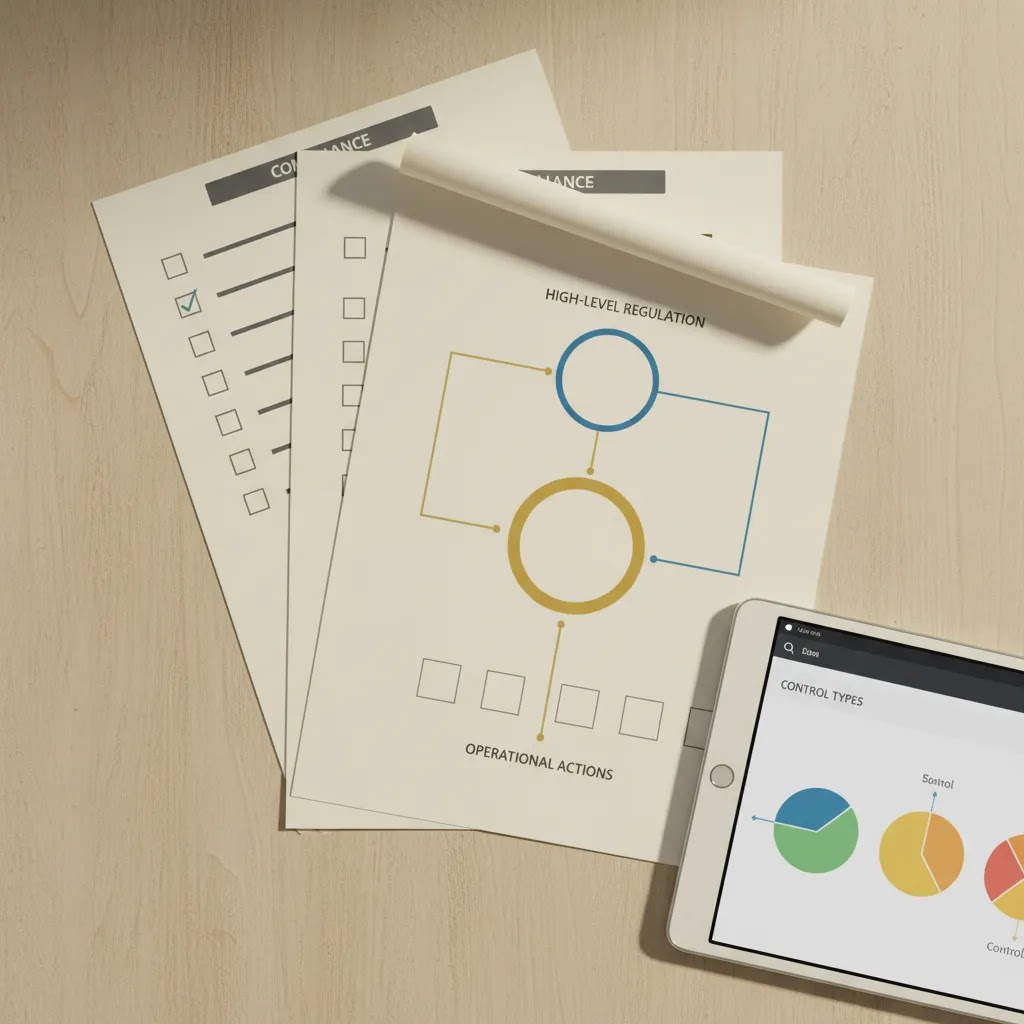
You have probably seen the phrase "RTS under DORA" come up in policy drafts, project meetings, vendor discussions, or regulator-facing workstreams, and the same question keeps surfacing: what exactly do these technical standards change in practice? For many compliance officers, CIOs, risk leaders, and outsourcing teams, the challenge is not understanding that DORA matters. The challenge is turning a high-level regulation into specific, testable, reportable operational work. That is where the digital operational resilience act RTS becomes important. The RTS gives detail to broad DORA requirements, shaping how institutions document controls, manage third-party risk, structure testing, and prepare submissions. If you are still building your foundation, it helps to start with what is digital resilience. From there, the RTS becomes much easier to place in context. DORApp was built to simplify DORA compliance for EU financial institutions through a modular approach, turning complex regulatory requirements into structured, manageable workflows with regulator-ready reporting support.
What RTS means under DORA
The digital operational resilience act RTS refers to Regulatory Technical Standards developed to make parts of DORA more specific and operational. DORA itself, formally Regulation (EU) 2022/2554, sets the legal framework. The RTS then adds detail on how some of those obligations should be applied, measured, structured, or documented.
Think of DORA as the rulebook headline and the RTS as the operational instructions that make the headline usable. Without that detail, institutions would still know the direction of travel, but they would have much more room for inconsistent interpretation.
If you want the broader legal foundation first, it helps to read digital operational resilience act alongside what is digital operational resilience act. Those explain the wider regulation, while this article focuses on the technical standards layer.
Why this matters beyond legal wording
From a practical standpoint, RTS text often affects templates, governance workflows, data fields, evidence expectations, and accountability lines. It may influence how your incident team captures timestamps, how your procurement team records subcontracting dependencies, or how your testing team scopes resilience exercises.
The reality is that many institutions do not struggle with understanding DORA at a headline level. They struggle with converting broad legal intent into consistent operational evidence. RTS helps close that gap.
Why the RTS matters in real compliance work
For a compliance program, broad principles are rarely enough. You need to know what data to collect, which controls to evidence, how detailed your records should be, and what format supervisors may expect. That is why the dora rts matters so much.
Under DORA, institutions are expected to manage ICT risk, report major incidents, test resilience, oversee ICT third-party arrangements, and support information sharing. The RTS makes parts of those pillars more concrete. In many cases, it reduces the room for vague internal interpretations that would not hold up well under supervisory scrutiny.
What many people overlook is that the RTS also affects operations outside compliance. Legal, procurement, vendor management, information security, internal audit, and business continuity teams may all need to align around the same technical standards.
RTS is where policy meets evidence
If your institution has a policy that says it monitors third-party ICT risk, the RTS may shape what "monitors" means in evidence terms. If your institution says it can report major ICT-related incidents quickly, the RTS may shape which facts need to be captured and how they should be structured.
That is one reason platforms like DORApp are worth evaluating. DORApp supports structured Register of Information processes through imports, workflow-based data handling, public-source enrichment, validation logic, and compliant export support, which can reduce manual friction where RTS-driven detail becomes operationally heavy.
The main areas covered by DORA RTS
The exact RTS package under DORA spans several topics, and the practical burden is not distributed evenly. Some institutions feel the pressure most strongly in incident reporting. Others feel it in outsourcing inventories, testing programs, or subcontracting oversight.
Here are the areas where digital operational resilience rts discussions most often become operationally significant.
ICT risk management and governance
RTS in this area may influence how you document governance, classify ICT assets or services, define control expectations, and evidence oversight. In 2026, regulators are increasingly focused on proof of compliance, not just policy existence. That means your governance model needs to show actual execution.
Major ICT-related incident reporting
This is where process quality matters a lot. Institutions need clear escalation logic, timestamp discipline, and reporting coordination. If you are working through how an incident report fits into the larger DORA process, RTS detail helps define what should be captured and how quickly teams need to react.
Resilience testing
Testing is not just about running a technical exercise and filing the result. Under DORA, resilience testing is a structured pillar with expectations around methodology, scope, governance, and remediation. If you need more context, see digital operational resilience testing and dora digital resilience testing.
ICT third-party risk and subcontracting
This area has become more detailed over time, especially with the 2026 context shaped by Delegated Regulation (EU) 2025/532 and stronger attention to subcontracting chains. Institutions now need to understand not only direct ICT providers, but in many cases the dependencies below them as well. That can become difficult quickly if your provider inventory is spread across spreadsheets, procurement tools, and email threads.
Register of Information and reporting structure
The Register of Information is mandatory under DORA and remains a major operational focus. EU-level reporting uses XBRL based on the DORA XBRL Data Point Model, and the first submission deadline was 30 April 2025. In 2026, the pressure is less about preparing once and more about keeping the register accurate over time. Platforms like DORApp streamline the Register of Information process through imports, intuitive maintenance, auto-enrichment from public data sources, validation checks, and compliant report generation support.
Which DORA RTS and ITS documents matter most (and how they map to DORA articles)
A common challenge with the digital operational resilience act RTS package is that it can feel like a stack of documents rather than an operating model. Competitor guidance often helps teams by explicitly listing the big-ticket items and mapping them back to the DORA articles they support. That mapping is useful because it makes scoping easier, speeds up ownership assignment, and reduces the risk that teams build evidence for the wrong thing.
Now, when it comes to DORA implementation, you typically do not need everyone reading everything at once. What you need is a shared understanding of which RTS and ITS topics drive day-to-day work in your institution, and which DORA obligations they are meant to operationalize.
Key RTS and ITS topic areas teams usually prioritize
While the exact document list and applicability can vary by entity type and supervisory context, most institutions tend to focus early on a set of recurring RTS and ITS themes:
A simple mapping: topic, DORA article area, and impacted teams
Think of this as an orientation layer. It is not a substitute for legal interpretation, and you should validate applicability with your compliance and legal teams. Still, it is often enough to help a program manager or workstream lead build a sensible plan.
How institutions use this mapping in practice
From a practical standpoint, teams typically use this map to do three things quickly.
This is also where many teams realize that “compliance work” is not only writing documents. It is building repeatable data and workflow discipline across functions that do not share the same systems or vocabulary.
RTS vs ITS, what is the difference?
This is one of the most common sources of confusion. RTS and ITS are not interchangeable, even though they often appear together in DORA conversations.
RTS usually provides regulatory detail on how obligations should be interpreted or applied. ITS, or Implementing Technical Standards, tends to focus more on the format, templates, procedures, or technical submission mechanics used to make reporting and implementation consistent.
Think of it this way: RTS often shapes the substance, while ITS often shapes the mechanics. In reality, the line may feel close when you are building controls, data models, and submission processes, but the distinction still matters when you assign responsibility internally.
Why teams should care about the distinction
If your legal and compliance teams review only the RTS, they may miss implementation details that sit in ITS-related requirements. If your operations or data teams focus only on reporting templates, they may miss the regulatory logic behind the data points. Strong DORA programs usually connect both views.
DORApp’s data handling approach is relevant here because it uses a streamlined internal data model that can be converted into regulator-facing XBRL outputs, helping teams work in business-friendly workflows without forcing everyone to think in raw reporting taxonomy terms from day one.
How to work with templates and forms (ITS), especially for incident reporting and the register
ITS content can look deceptively straightforward because it often comes with templates, forms, and procedural steps. Here’s the thing: templates do not just change what you submit. They change how you collect information internally, how fast teams need to coordinate, and how you maintain consistency across reporting cycles.
In most institutions, the real effort is not filling in the template once. The real effort is building a process that can reliably produce those fields under time pressure, with clear ownership, and with a version history you can explain later.
What ITS-driven templates usually mean operationally
When a template becomes the standard, it typically creates a few concrete requirements for your operating model:
Where firms often lose time
Two patterns show up again and again.
First, incident reporting slows down because teams cannot get the right facts at the right moment. You may have partial technical data early on, evolving impact assessments, and uncertainty about classification, all while a reporting timeline is running. Without an agreed internal intake and escalation structure, people spend critical hours reconciling who knows what.
Second, the Register of Information becomes expensive to maintain because updates are not owned as a routine process. Provider data changes, subcontractors change, services move, and internal owners rotate. If updates rely on annual scrambling, the register tends to drift away from reality.
A practical approach to ITS readiness
You do not need to over-engineer this to get value. A few high-leverage steps can improve readiness without turning it into a months-long data project:
This is not regulatory advice, and you should validate details with your compliance and legal teams. Still, these steps often make the difference between “we have templates” and “we can actually produce submissions reliably.”

What the RTS changes for your institution in 2026
By 2026, many financial entities have already moved past the initial question of whether DORA applies. The harder question is whether they can show a supervisor that their controls are active, traceable, and repeatable.
From a regulatory standpoint, 2026 marks a shift toward demonstrable execution. The European Supervisory Authorities designated Critical Third-Party Providers in November 2025, supervisory expectations around subcontracting depth have increased, and regulators are increasingly able to cross-check data quality at scale. That means weak governance links become more visible.
Expect more attention on consistency
If one system says a provider supports a critical function, another says it does not, and your Register of Information says something else again, that inconsistency may become a real issue. RTS-driven compliance work is often less about writing one more policy and more about creating a single defensible operating model.
Expect more attention on evidence trails
In practice, this means approvals, review gates, timestamps, ownership changes, and remediation actions matter more. A process that exists only in PowerPoint will not usually be enough.
With features such as workflow automation, non-blocking validation, searchable records, audit trail support, and XBRL-oriented reporting outputs, DORApp allows compliance teams to begin operating with imperfect data and improve maturity over time rather than waiting for a perfect starting point.
RTS depth areas competitors emphasize but teams underestimate
Even strong programs can underestimate where RTS-level detail increases the proof burden. The gap is rarely “we forgot to write a policy.” It is more often “we cannot show consistent execution across time, teams, and systems.”
If you want to reduce surprises in 2026, it helps to focus on a few areas that supervisors and auditors often pay attention to in practice, especially where governance and operational discipline meet.
Management body accountability and governance expectations
Competitor guidance tends to emphasize that management body accountability is not a formality. In most cases, RTS detail makes it easier for a supervisor to ask, “Who approved this, when, based on what information, and how do you know it is still working?”
That often translates into more explicit governance artifacts: documented decisions, clear ownership assignments, review cadences, and evidence that senior oversight is active for important ICT risk topics. It also means governance is not only about the security team. It touches procurement decisions, outsourcing risk acceptance, incident escalation thresholds, and remediation prioritization.
People and process expectations, not only technology
Many teams invest heavily in tools, monitoring, and technical controls, then assume the rest will follow. The reality is that resilience is also built on repeatable procedures and human behavior under pressure.
Supervisors often look for signs of operational discipline: whether cyber hygiene expectations are communicated and reinforced, whether staff know escalation routes, whether incident response is practiced, and whether procedures are followed consistently. Evidence here does not need to be perfect, but it typically needs to be credible and repeatable.
What good evidence can look like (descriptive examples)
Evidence expectations can vary by institution type and supervisor, and this is not a checklist you should treat as universal. Still, it helps to picture what “good” could look like when someone asks you to prove execution:
Think of it this way: the goal is not paperwork. The goal is to be able to tell a consistent story about how your institution manages ICT risk, backed by artifacts that reflect normal operations rather than last-minute reconstruction.
How compliance teams usually prepare
If you are trying to operationalize dora rts requirements, the best starting point is not usually a massive rewrite of everything. It is a structured gap review. You want to identify where the RTS changes your required level of detail, control evidence, reporting format, or governance discipline.
A practical preparation sequence
Where institutions often get stuck
Consider this: the issue is rarely only legal interpretation. More often, teams get stuck on fragmented ownership, inconsistent source data, and workflows that still depend on email and spreadsheet chasing. That is especially common in third-party risk and Register of Information maintenance.
If you want broader supporting context, the DORA Fundamentals and Digital Operational Resilience category pages are useful places to keep reading. You may also find value in DORA Pillars Explained: Complete Breakdown (2026) and DORA European Commission Timeline and History (2026) for additional background.
Disclaimer: The information in this article is intended for general informational and educational purposes only. It does not constitute professional technical, legal, financial, or regulatory advice. Website performance outcomes, platform capabilities, and business results will vary depending on your specific circumstances, goals, and implementation. Always evaluate tools and platforms based on your own needs and, where relevant, seek professional guidance.
Regulatory note: This article is for informational purposes only and does not constitute financial, legal, or regulatory advice. DORA compliance requirements may vary based on your institution type, size, and national regulatory framework. Content referencing regulated industries is provided for general context only and should not be interpreted as legal, regulatory, compliance, or financial advice. If you operate in a regulated sector, always consult qualified financial, legal, and compliance professionals for guidance specific to your situation.

Frequently Asked Questions
What does RTS mean in the context of DORA?
Under DORA, RTS means Regulatory Technical Standards. These standards add detail to parts of the Digital Operational Resilience Act so financial entities can apply requirements more consistently. Instead of staying at the level of broad legal principles, RTS helps define operational expectations around areas such as ICT risk management, incident reporting, testing, and third-party oversight. For your institution, that often means more specific data, clearer evidence requirements, and less room for loosely defined internal interpretation. RTS is important because it turns high-level obligations into something your teams can actually implement, monitor, and defend.
Is the digital operational resilience act RTS the same as DORA itself?
No. DORA is the main EU regulation, Regulation (EU) 2022/2554, and it became effective on 17 January 2025. The RTS sits underneath that framework and provides technical detail on how certain obligations should be applied. Think of DORA as the legal framework and the RTS as part of the practical instruction set. You need both perspectives. If you read only the regulation, you may miss operational detail. If you focus only on technical standards, you may miss the wider governance logic that DORA is trying to establish across financial entities.
Why are DORA RTS documents so important for compliance teams?
They matter because compliance programs need more than broad policy language. Your institution has to evidence execution, not just intention. RTS documents often influence what data must be gathered, how controls should be documented, which workflows need approval gates, and how reporting should be structured. They also help reduce inconsistent interpretation across functions such as compliance, ICT, procurement, risk, and legal. In many institutions, the hardest part of DORA is not understanding the goal. It is making the goal operational. RTS helps teams move from theory into procedures, evidence, and accountable ownership.
How does RTS relate to the Register of Information?
The Register of Information is one of the most operationally demanding DORA obligations because it requires structured, accurate records of ICT third-party service arrangements. RTS and related technical standards influence how institutions think about data quality, dependencies, subcontracting detail, and regulator-facing consistency. Since EU-level submissions use XBRL, institutions also need a reliable way to convert business records into technical reporting outputs. In practice, this means your Register of Information cannot be treated as a once-a-year spreadsheet exercise. It needs ongoing governance, ownership, and evidence-backed maintenance across procurement, ICT, and compliance teams.
What is the difference between RTS and ITS under DORA?
RTS usually focuses on the regulatory detail behind an obligation, while ITS usually focuses more on implementation mechanics such as templates, submission formats, and procedural consistency. A simple way to remember it is this: RTS often shapes the substance, ITS often shapes the technical execution. Both matter. If your teams review only RTS, they may miss practical submission expectations. If they review only ITS, they may not fully understand why the data points exist or how they relate to DORA’s wider governance model. Good implementation typically requires reading them together, not separately.
Does the RTS affect only large banks and insurers?
No. DORA applies across 20 categories of EU financial entities, although the proportionality of implementation may differ based on the entity type, size, and operational complexity. Smaller firms may not need the same operating model as large cross-border institutions, but they still need defensible governance, accurate records, and a practical way to meet relevant obligations. The burden often shows up differently. A large bank may struggle with scale and coordination. A smaller institution may struggle with limited resources and spreadsheet-based processes. In both cases, RTS can materially shape what good evidence and good governance look like.
What changed in 2026 that makes RTS more relevant now?
2026 is increasingly defined by proof of compliance rather than initial readiness. Supervisors are looking beyond project completion claims and focusing more on evidence, consistency, and ongoing operations. The designation of Critical Third-Party Providers in late 2025, the deeper subcontracting focus introduced by Delegated Regulation (EU) 2025/532, and more mature regulator data checks all raise the importance of structured implementation. For many institutions, that means tightening governance around third-party risk, testing, incident management, and reporting quality. RTS becomes more relevant because it shapes how institutions demonstrate that DORA controls are operating in practice.
Can software solve DORA RTS compliance on its own?
Not on its own. Software can support data quality, workflows, approvals, reporting, audit trails, and cross-team coordination, but it does not replace legal judgment, internal governance, or accountability. DORA requires institution-specific interpretation and implementation. A platform may help you operationalize processes faster and with more consistency, especially around the Register of Information, third-party risk, and reporting preparation. DORApp, for example, offers modular workflows, data enrichment support, auditability, and regulator-ready export capabilities. Still, your institution must define ownership, validate interpretations, and align implementation with legal and compliance advice.
What should a compliance officer do first when reviewing DORA RTS requirements?
Start with a gap assessment tied to actual process ownership. Map each relevant RTS topic to the teams that operate it, then compare current practice against expected detail, evidence, and reporting needs. Check where data is fragmented, where responsibilities are vague, and where manual work creates risk. For most institutions, the first high-value areas are the Register of Information, incident reporting, testing governance, and third-party dependency oversight. Once you know where the pressure points are, you can decide whether to improve workflows internally, bring in external support, or evaluate a platform that helps structure and evidence the work.
What is the Digital Operational Resilience Act (DORA)?
The Digital Operational Resilience Act (DORA) is an EU regulation, Regulation (EU) 2022/2554, that sets requirements for how financial entities manage ICT risk and operational resilience. It covers areas such as ICT risk management, incident reporting, resilience testing, oversight of ICT third-party providers, and information sharing. In practice, DORA is meant to help institutions build repeatable resilience capabilities and be able to demonstrate them with credible evidence over time.
Who needs to comply with DORA?
DORA applies to a defined set of EU financial entities, covering multiple categories across banking, insurance, investment services, payments, and other regulated financial activities. Exact applicability and proportionality can depend on the entity type, size, and regulatory context, so institutions typically confirm their scope with legal and compliance professionals. Even where proportionality applies, many organizations still need clear governance, incident processes, testing discipline, and structured third-party records to show credible operational resilience.
What are the 5 pillars of the Digital Operational Resilience Act (DORA)?
DORA is commonly described through five pillars: ICT risk management, ICT-related incident reporting, digital operational resilience testing, ICT third-party risk management, and information sharing arrangements. The RTS and ITS help turn these pillars into operational expectations, which often means more detailed procedures, defined data requirements, and clearer evidence trails across compliance, ICT, procurement, and risk teams.
What are the 5 pillars of digital resilience?
In DORA discussions, “digital resilience” is often framed using the same five pillars used for DORA itself: managing ICT risk, detecting and reporting incidents, testing resilience, controlling ICT third-party risk, and participating in information sharing where relevant. The practical implication is that resilience is not one control or one team. It is a set of coordinated capabilities that need to work together consistently, especially when an incident or disruption is unfolding.
Key Takeaways
Conclusion
The digital operational resilience act RTS matters because it is where DORA becomes concrete. It shapes how your institution records facts, assigns ownership, structures evidence, and demonstrates that resilience processes actually work. For most teams, that is the real challenge. Not reading the regulation, but operationalizing it across compliance, ICT, procurement, and management in a way that stands up over time.
If your organization is now moving from initial DORA readiness into sustained execution, this is the right time to review where technical standards create hidden operational pressure. That may be your Register of Information, your incident workflow, your testing methodology, or your subcontracting oversight. Explore how DORApp can support your DORA compliance journey with a 14-day free trial, or book a personalized walkthrough at Dorapp. You can also keep learning through the Dorapp blog if you want clear, practical guidance without unnecessary complexity.
About the Author
Matevž Rostaher is Co-Founder and Product Owner of DORApp. He brings deep experience in building secure and compliant ICT solutions for the financial sector and is positioned by DORApp as an expert trusted by financial institutions on complex regulatory and operational challenges. DORApp’s own webinar materials list him as CEO and Co-Founder of Skupina Novum d.o.o. and CEO and Co-Founder of FJA OdaTeam d.o.o. His articles should carry the voice of someone who understands not just compliance requirements, but the systems and delivery realities behind them.