Automated Resilience Testing (2026 Guide)

You have policies, spreadsheets, a few testing notes from IT, maybe an external penetration test report, and a compliance deadline that keeps getting closer. On paper, your institution may look organized. In practice, resilience testing often lives in too many places at once. Risk owns one piece, security owns another, procurement has vendor dependencies somewhere else, and senior management wants a clear answer to one question: can you prove your organization is operationally resilient?
That is where automated resilience testing starts to matter. Not because automation replaces judgment, but because it helps you run testing in a repeatable, traceable, and evidence-friendly way. Under DORA, resilience is not just about doing tests occasionally. It is about showing that testing supports your broader ICT risk management, third-party oversight, and operational resilience efforts over time. If you are still piecing everything together manually, 2026 is likely to feel less like a setup year and more like a proof year.
DORApp was built to simplify DORA compliance for EU financial institutions through a modular approach, turning complex regulatory requirements into structured, manageable workflows with guaranteed technical report acceptance.
What automated resilience testing actually means
Automated resilience testing is the use of software, workflows, and repeatable logic to plan, trigger, document, validate, and evidence operational resilience tests. That can include scheduling test cycles, assigning owners, collecting artifacts, checking completeness, tracking remediation actions, and creating management-ready reporting.
Here is the thing: automation does not mean pressing one button and magically becoming compliant. It usually means reducing manual coordination so your team can spend more time on interpretation and decision-making. For many institutions, the biggest gain is not test execution itself. It is consistency.
If you are still getting familiar with the broader concept, it helps to start with what is digital resilience and then connect that foundation to digital operational resilience testing more generally.
What usually falls under automation
In practice, automated resilience testing may cover:
Think of it this way: instead of chasing updates by email and manually merging files before every committee meeting, you build a structured testing rhythm that your institution can repeat.
Why automation matters more in 2026
The reality is that many institutions already completed their first round of DORA readiness work by January 17, 2025. What changed afterward is the expectation. Regulators are moving from initial implementation toward evidence that your controls and resilience processes actually operate in practice.
That shift makes manual testing programs harder to defend. If a test happened but ownership is unclear, evidence is incomplete, or remediation is tracked in separate spreadsheets, your institution may struggle to show maturity. Automated resilience testing supports a stronger audit trail and a clearer operating model.
From a regulatory standpoint, this also ties back to the digital operational resilience act and the practical question of what is digital operational resilience act in day-to-day governance, not just in legal text.
2026 is about proof, not just setup
As currently defined, DORA expects financial entities to maintain structured ICT risk management, incident handling, resilience testing, third-party oversight, and information sharing practices. By 2026, supervisors are increasingly interested in whether those processes are living workflows rather than static documents.
This is also happening alongside newer developments, including the ESA designation of Critical Third-Party Providers in late 2025, expanding attention on supplier dependency, and Delegated Regulation (EU) 2025/532, which added deeper subcontracting risk expectations. Resilience testing no longer sits in isolation. It connects to governance, dependency mapping, and third-party risk visibility.
What parts of resilience testing should be automated
Not every part of a test belongs in an automated workflow, but several parts almost always benefit from structure. The best candidates are the repetitive, evidence-heavy, coordination-heavy steps that drain time and create inconsistency when handled manually.
Planning and scoping
Many teams still scope tests through meetings, shared files, and ad hoc messaging. That works until people change roles or critical context gets lost. Automation can help by using templates, predefined control points, linked asset or service records, and owner assignments that make each testing cycle easier to repeat.
Evidence collection and validation
What many people overlook is that evidence quality often matters as much as test quality. If your team cannot quickly show what was tested, by whom, against which scope, with what findings, and what happened next, you create friction for internal audit, risk review, and supervisory discussions.
Platforms like DORApp streamline the creation and maintenance of the Register of Information process through a 5-step approach: importing existing data, managing it through an intuitive interface, auto-enriching from public sources, validating against ESA rules, and generating compliant reports with one click.
That matters because resilience testing depends on a clear understanding of critical ICT services, providers, dependencies, and service arrangements. If your underlying data is weak, test design may be weak as well. This is one reason many institutions connect testing programs to the dora register of information.
Remediation and follow-through
A test that identifies gaps but does not trigger tracked remediation is only half useful. Automated workflows can assign actions, set due dates, escalate overdue items, and preserve the full decision trail. In practice, this means fewer gaps between testing, governance, and actual improvement work.
If you are evaluating what a more mature testing operating model looks like, dora digital resilience testing is the natural next step.
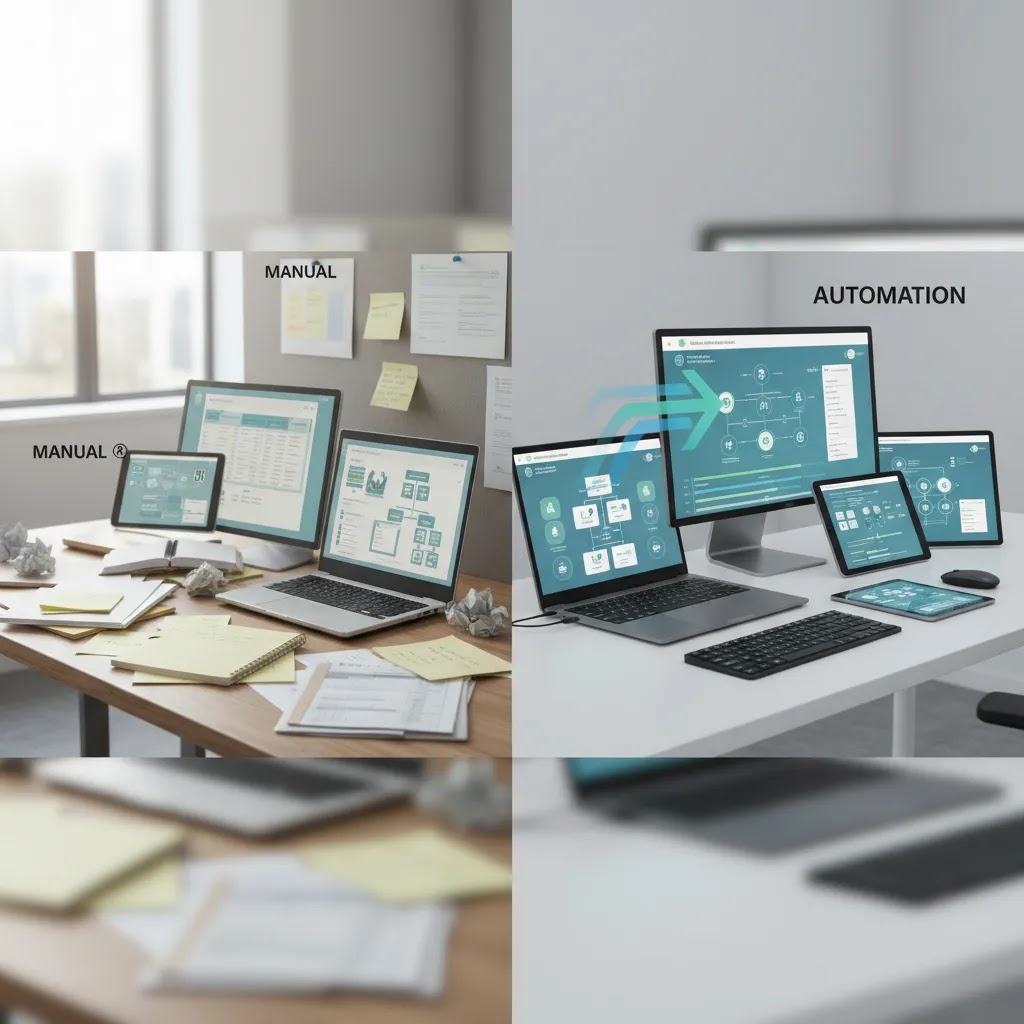
A practical automation workflow: from planning to reporting
If you are trying to make automation real, it helps to think in terms of cadence. Not just what you test, but how often you plan, how you evidence decisions, and how you keep remediation moving without turning every finding into a six-month email chain.
For most small business owners and entrepreneurs, cadence might sound like a project management detail. In regulated financial entities, it often becomes the difference between a testing program that feels repeatable and one that feels improvised every cycle.
An example cadence that is usually workable
One practical structure many institutions use is an annual plan with quarterly execution cycles. The exact frequency should be proportionate to your size, complexity, and outsourcing footprint, but the flow often looks like this:
Think of it this way: if you can show a consistent rhythm, with each cycle producing the same kinds of artifacts, you are already doing a lot of the heavy lifting that audit and supervisory conversations tend to demand.
The automation checkpoints that keep things from slipping
Automation is most effective at the handoffs, the moments where information normally gets lost. A few checkpoints that often make the workflow more defensible are:
The difference often comes down to whether your testing data is structured from day one. If execution evidence, approvals, and remediation status live in separate tools, reporting becomes a manual reconciliation exercise. If your workflow captures them together, reporting becomes a byproduct.
Keeping it proportionate for different institutions
A smaller firm with a simpler ICT stack may run fewer campaigns, rely on lighter approvals, and keep templates very focused. A cross-border group with many entities and heavy outsourcing typically needs stricter governance gates, stronger traceability from critical services to tests, and clearer escalation. Neither approach is automatically better. The goal is that your process is repeatable, owned, and evidence-friendly relative to your real risk profile.
Where human judgment still matters
Automation is helpful, but it should not flatten judgment. Some parts of resilience testing require experienced interpretation, especially where business criticality, scenario realism, concentration risk, or regulatory escalation is involved.
Scenario design
You can automate scenario libraries and approval workflows, but the choice of what to test still needs context. A payment institution, insurer, and investment firm may all be subject to DORA, yet their operational dependencies and threat assumptions can differ significantly.
Materiality decisions
Not every failed test result means the same thing. Teams still need to decide whether an issue reflects a documentation gap, a control weakness, a real operational vulnerability, or a broader governance problem. Software can surface patterns, but leadership and control functions still need to interpret them.
Board and regulator communication
From a practical standpoint, automation is great at producing structured outputs. It is less effective at replacing the nuance required for management challenge, board briefings, and regulator dialogue. The goal is not to remove people from the process. The goal is to make their time count where it matters most.
With features like automated workflows, non-blocking validation, a streamlined data model that auto-converts to XBRL, and full-text search across all records, DORApp allows compliance teams to start working immediately rather than waiting for perfect data.
How DORA changes the testing picture
Under DORA, resilience testing is one of the five core pillars, alongside ICT risk management, incident reporting, third-party risk oversight, and information sharing. That means testing should not be treated as a standalone security exercise. It sits inside a broader digital operational resilience framework.
For a useful refresher, readers often pair this topic with the category pages for Digital Operational Resilience and ICT Risk Management.
Testing should reflect real dependencies
DORA pushes institutions toward a more connected view of resilience. If a critical service depends on multiple ICT providers, subcontractors, or concentration points, your tests should reflect that chain. This is one reason automated resilience testing is gaining traction. It can connect data, ownership, and evidence across teams that usually work in silos.
Evidence has to be defensible
In many cases, the technical test itself is not the main bottleneck. The bottleneck is proving that the test was scoped appropriately, approved by the right people, executed against defined objectives, and followed by remediation. Automated workflows may help close that gap by preserving timestamps, approvals, and decision history in one place.
If you want wider context, these published references may help: DORA Pillars Explained: Complete Breakdown (2026) and DORA European Commission Timeline and History (2026).

DORA testing requirements: what you need to evidence
When supervisors, internal audit, or second line teams challenge a testing program, they usually do not start by asking whether you ran a test. They start by asking whether your testing approach is controlled, repeatable, and linked to what matters most in your operating model.
The reality is that “defensible evidence” typically means you can tell a complete story from critical services to tests to findings to closure. Not as a narrative in a slide deck, but as traceable artifacts that stand on their own.
What you typically need to show, end to end
Without getting into legal interpretation, most institutions aim to evidence a set of practical building blocks that map cleanly to resilience testing expectations:
What many people overlook is that audit teams often care as much about the joins between these steps as the steps themselves. For example, can you show that the scope you tested was the scope that governance approved, and that remediation was verified against the original finding?
What “defensible” usually looks like in practice
Defensible evidence is usually simple, but disciplined. It often includes:
Consider this: if a key person leaves, could someone else pick up your testing records and understand what happened without a verbal handover? That question is a good proxy for whether your evidence is structured enough.
Testing is only one pillar, but it should connect to the others
Under DORA, resilience testing tends to be assessed as part of a wider system. Testing outputs often feed back into ICT risk management through control improvements and updated risk views. Findings may influence incident readiness and escalation, especially where scenario exercises expose reporting gaps. Testing scope should align with third-party oversight, particularly when critical services depend on outsourced providers. Even information sharing becomes more practical when your institution can describe tested scenarios and lessons learned in a structured way.
Think of it this way: a testing program that produces evidence in isolation can still feel immature. A testing program that shows clear feedback loops across the other pillars often reads as operational resilience, not just testing activity.
Choosing a practical operating model
If you are building or refining an automated resilience testing program, start with your operating model, not your software shortlist. Teams usually get better results when they define who owns the process, what must be evidenced, which systems feed the workflow, and how issues move into remediation before they pick tools.
A realistic progression for most institutions
A practical rollout often looks like this:
Now, when it comes to tooling, one platform worth exploring is DORApp. Based on verified product information, it offers a modular DORA-focused structure, including ROI and TPRM capabilities already available, with additional modules on the roadmap for incident management, ICT risk management and governance, and information and intelligence sharing. Subscription access starts by module, and a Free Trial – 14 Days is available if you want to see how its workflow approach fits your institution.
Why modularity helps
Many institutions are not rebuilding their whole compliance stack from scratch. They are filling painful gaps. A modular approach can make sense if your biggest issue is testing evidence, third-party dependency clarity, or Register of Information quality rather than a full enterprise transformation. That founder-led, sector-specific philosophy also fits Dorapp's broader positioning, informed by Matevž Rostaher's background across FinTech, InsurTech, and RegTech.
Tooling landscape for automated resilience testing
Most institutions do not “buy an automated resilience testing tool” as a single category. In practice, automation usually comes from a set of systems working together: some hold governance and evidence, some detect signals, some run technical tests, and some manage third-party visibility.
From a practical standpoint, you get better outcomes when you choose tools based on how they connect, not on how polished each tool looks on its own.
Common tool categories used in practice
To keep things neutral and non-vendor-specific, these are the categories that often show up in real testing operating models:
Not every institution needs all categories at full maturity. The goal is that your testing workflow can pull the right inputs and produce controlled outputs, with traceability across teams.
Selection criteria that usually matter more than feature lists
When compliance and ICT risk teams evaluate tooling, a few selection criteria tend to matter across almost every institution:
The difference often comes down to how well the tooling supports your governance model. For example, if approvals, scope changes, and remediation validation cannot be captured cleanly, teams often fall back to email and spreadsheets, even if the tool has strong dashboards.
Implementation reality: integration and data quality drive timelines
Here is the thing: implementation timelines are often driven less by user interface work and more by data quality and integration effort. If service catalogs, provider records, or dependency mappings are incomplete, automation can highlight the gaps quickly, but it cannot always fill them automatically.
That is also why institutions that start with a clear data model, defined owners, and consistent taxonomy usually move faster. The workflow becomes a structure that improves discipline over time, rather than a new layer that depends on perfect inputs from day one.

Common mistakes to avoid
The biggest mistakes in automated resilience testing are usually not technical. They are organizational. Teams buy workflow tooling before defining ownership, automate broken processes, or assume that more dashboards automatically means more resilience.
Three mistakes that show up often
Consider this: the best automated resilience testing setups usually feel boring in a good way. They are predictable, structured, and easy to audit. That is exactly what makes them useful.
Explore how DORApp can support your DORA compliance journey with a 14-day free trial. Our team is ready to walk you through a personalized demo for your institution via Book a Demo.
Disclaimer: The information in this article is intended for general informational and educational purposes only. It does not constitute professional technical, legal, financial, or regulatory advice. Website performance outcomes, platform capabilities, and business results will vary depending on your specific circumstances, goals, and implementation. Always evaluate tools and platforms based on your own needs and, where relevant, seek professional guidance.
Regulatory note: This article is for informational purposes only and does not constitute financial, legal, or regulatory advice. DORA compliance requirements may vary based on your institution type, size, and national regulatory framework. Content referencing regulated industries is provided for general context only and should not be interpreted as legal, regulatory, compliance, or financial advice. If you operate in a regulated sector, always consult qualified financial, legal, and compliance professionals for guidance specific to your situation.
Frequently Asked Questions
What is automated resilience testing in simple terms?
Automated resilience testing is a structured way to manage resilience tests using software and workflows instead of scattered spreadsheets, emails, and manual reminders. It usually helps with planning, assigning tasks, collecting evidence, validating required information, tracking issues, and documenting remediation. It does not remove the need for expert judgment. Instead, it helps your institution run tests more consistently and prove what happened afterward. For compliance teams, that often means better visibility, a clearer audit trail, and less time spent chasing updates across departments.
Does DORA require full automation of resilience testing?
No, DORA does not require that all resilience testing be fully automated. What matters is that your testing approach is appropriate, documented, repeatable, and connected to your broader digital operational resilience framework. Automation may help you meet those expectations more efficiently, especially where evidence, workflows, and remediation tracking are involved. Still, many key decisions remain human, such as scenario design, criticality judgments, escalation decisions, and board communication. Tools support the process, but they do not replace institutional accountability.
Which teams are usually involved in automated resilience testing?
Most institutions involve several teams. Compliance, ICT risk, IT or security, internal control functions, and sometimes procurement or vendor management all play a role. Senior management may also need visibility into results and remediation status. The exact mix depends on your institution’s structure and on what is being tested. A payment institution with heavy outsourcing, for example, may involve third-party oversight more deeply than a smaller firm with a simpler stack. Good automation helps these teams work from one coordinated process rather than several disconnected ones.
What should you automate first?
Start with the most repetitive and coordination-heavy parts of the process. For many teams, that means test scheduling, owner assignment, evidence collection, mandatory field checks, and remediation tracking. These areas create a lot of friction when managed manually, and they usually offer quick gains in consistency. Avoid starting with flashy dashboards if the underlying workflow is still unclear. If the process is weak, reports may only make the problem more visible. A better approach is to stabilize the process first, then improve reporting once the data becomes reliable.
How does the Register of Information relate to resilience testing?
The Register of Information supports resilience testing by giving you a more reliable view of ICT providers, services, contracts, and dependencies. If your testing team does not know which third-party arrangements support critical services, it becomes much harder to design realistic scenarios or assess concentration risk. Under DORA, the Register of Information is a mandatory record of ICT third-party service arrangements, and it often becomes a practical foundation for stronger testing design. Better register quality usually leads to better scoping, better evidence, and more useful testing outcomes.
Can smaller financial institutions benefit from automated resilience testing?
Yes, in many cases smaller institutions may benefit even more because they usually have less time and fewer specialist resources. A lean automated workflow can reduce administrative effort and make responsibilities easier to manage. That said, smaller institutions usually do not need the same level of complexity as large cross-border groups. The right setup should be proportionate to your size, structure, outsourcing exposure, and regulatory expectations. Simple, well-governed workflows often outperform complicated systems that nobody consistently uses.
Is automated resilience testing the same as penetration testing?
No. Penetration testing may be one input into a broader resilience testing program, but it is not the whole program. Automated resilience testing is about the operating framework around testing, including scope, scheduling, workflow management, evidence capture, approval, findings, and remediation. Depending on your institution, resilience testing may involve technical tests, scenario-based exercises, failover validation, third-party dependency reviews, or continuity-related checks. The automation layer helps coordinate and document those activities, while the tests themselves may still involve specialized tools and expert teams.
What should compliance officers ask when evaluating a testing solution?
Ask whether the solution supports repeatable workflows, evidence capture, approvals, traceability, remediation tracking, and reporting that fits supervisory and audit expectations. You should also ask how it handles data quality, role permissions, and integration with third-party or Register of Information records. If your institution works across multiple entities or jurisdictions, governance flexibility matters too. The best solution is not necessarily the one with the most features. It is the one that fits your operating model and helps your team produce defensible outcomes without creating unnecessary process overhead.
How often should automated resilience testing be reviewed?
Your testing workflow should be reviewed regularly, especially after major incidents, significant outsourcing changes, control failures, or shifts in your ICT environment. At a minimum, institutions usually reassess testing scope and methodology on a recurring governance cycle. In 2026, that review matters more because supervisors are increasingly focused on proof of ongoing resilience rather than one-off setup work. A good review should cover whether tests still reflect critical services, whether findings are being closed effectively, and whether the process still produces audit-ready evidence.
Where can you learn more before looking at software options?
A strong starting point is to understand DORA’s overall framework first, then narrow into testing, third-party risk, and operational evidence. Dorapp’s educational content around digital operational resilience is useful for that, especially if you want a practical, less abstract explanation of what these topics mean in real workflows. Once your team understands the operating model you need, software evaluation becomes much easier. You are no longer shopping for features in the dark. You are looking for support for a process you already understand.
What are the five DORA pillars, and how does resilience testing connect to the others?
DORA is commonly explained through five pillars: ICT risk management, incident reporting, digital operational resilience testing, ICT third-party risk management, and voluntary information sharing. Resilience testing connects to the others by validating whether your risk controls work in practice, exposing gaps that could affect incident readiness and escalation, and forcing clarity on third-party dependencies that shape real service resilience. In most cases, the strongest programs treat testing as a feedback loop that improves risk management, third-party oversight, and operational governance over time.
What evidence do regulators typically expect for DORA resilience testing?
Evidence expectations vary by institution and supervisor, but they typically focus on whether your approach is documented, repeatable, and traceable. That often means you can show approved plans, defined scope linked to critical services, execution artifacts with timestamps and ownership, consistent findings classification, and tracked remediation through closure, including validation or re-test where appropriate. The goal is usually to demonstrate that testing is not occasional activity, but a controlled process that produces outcomes management can act on.
What tools are commonly used to automate DORA resilience testing activities?
Most institutions use a combination of tools rather than a single system. Common categories include governance and workflow tools for approvals and evidence, monitoring and observability for signals that influence test selection, security event detection for scenario inputs, orchestration tooling for repeatable technical checks, and third-party risk tooling to maintain provider and dependency visibility. What matters most is usually how well these tools integrate and whether they can produce audit-ready outputs without heavy manual reconciliation.
How does automated resilience testing relate to continuous monitoring and incident reporting?
Continuous monitoring can help you decide what to test and when, especially if it highlights recurring instability, capacity pressure, or dependency issues in critical services. Testing then validates whether controls and recovery mechanisms behave as expected under stress. Findings from tests can also improve incident reporting readiness by clarifying thresholds, escalation paths, and evidence capture habits before a real incident happens. In most cases, these practices work best when they share the same service and dependency view, rather than operating as separate processes.
Key Takeaways
Conclusion
Automated resilience testing is not really about automation for its own sake. It is about making resilience work easier to run, easier to evidence, and easier to improve. For compliance teams, ICT risk leaders, and operational resilience owners, that often means fewer disconnected processes and a clearer line from testing activity to governance action.
The institutions making the most progress are usually not the ones chasing the most sophisticated tooling first. They are the ones building a repeatable operating model, improving data quality, and creating testing workflows that hold up under audit, management review, and regulatory scrutiny. Automation then becomes a practical enabler instead of another layer of complexity.
If you want to keep building that foundation, explore more on the Dorapp blog or see how DORApp approaches structured DORA workflows, modular rollout, and technical reporting support at dorapp.eu. It is a useful next step if you are trying to move from one-off compliance activity toward a more durable resilience process.
About the Author
Matevž Rostaher is Co-Founder and Product Owner of DORApp. He brings deep experience in building secure and compliant ICT solutions for the financial sector and is positioned by DORApp as an expert trusted by financial institutions on complex regulatory and operational challenges. DORApp’s own webinar materials list him as CEO and Co-Founder of Skupina Novum d.o.o. and CEO and Co-Founder of FJA OdaTeam d.o.o. His articles should carry the voice of someone who understands not just compliance requirements, but the systems and delivery realities behind them.